

 Best Selling Medicine


Dr. Aditya Shah
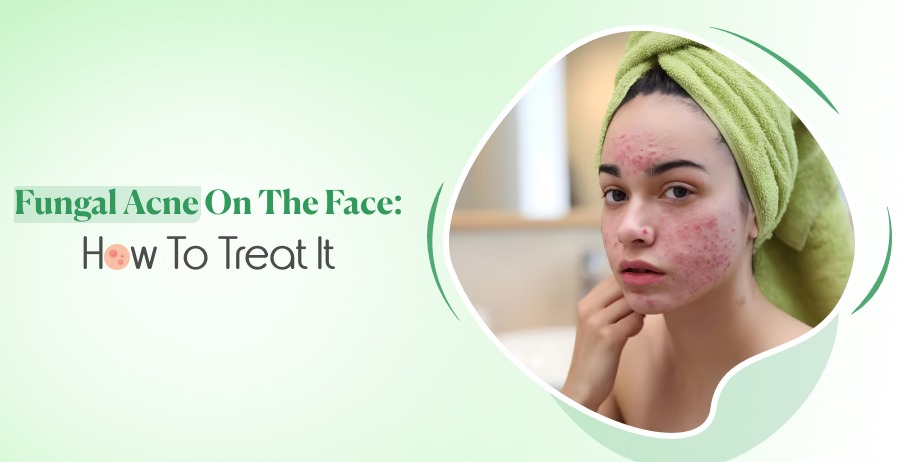
Expert In Clinical Pharmacology And Drug SafetyView moreGeneral Fungal Acne on the face is irritating for anyone. Irritation, both physically and mentally becomes more severe when there is a fungal infection. You will generate thoughts about skin care, dark patches on your skin, and, of course, face loss. So, you need a prompt solution for the condition. Right?
Here we are to give you a complete overview of fungal infection on your face. Here, we will clear up what these are, how you develop these, and how to do the skin care, so that you won’t have to suffer from face loss. So, stay tuned with us till the end of the article.
What Is A Fungal Infection On The Face?
Medically, the condition is called Malassezia Folliculitis, and it is not at all like general acne. It happens when your hair follicles are surrounded by yeast formations. Hence, treatment of the same cannot be done with the normal acne solutions that you usually use for skin care. You will need here a treatment for fungal infection.
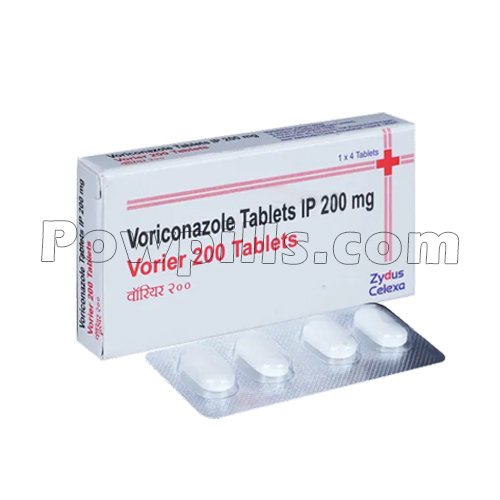
Here Is A Product That Will Treat Fungal Acne:

Nature Of Fungal Acne On The Face:
The acne in these cases can be more painful than traditional acne, and moreover, there is a chance of developing a dark patch or a mark on your face. When it is not treated, you can even face redness and extreme irritation, sometimes associated with an inflammation, too.
Treatment For Fungal Acne
Treatment of the fungal acne, especially when it is on your face, becomes a little bit critical. This is because of your facial skin, which is a bit more sensitive compared to the skin of the rest of the body. Therefore, only medical treatment will not be the solution for skin care here. You will have to undergo some home and natural healing solutions too, and some restrictions. Let us make a list of all the things you need in a nutshell.
| Treatment Type | Examples | How It Helps | Usage Notes |
|---|---|---|---|
| Topical Antifungal Creams | Ketoconazole, Clotrimazole, Miconazole | Kills yeast on the skin | Apply 1–2 times daily for 2–4 weeks |
| Antifungal Shampoo (Used as Face Wash) | Ketoconazole shampoo | Reduces fungal growth | Leave on skin for 5 minutes before rinsing |
| Oral Antifungal Medication | Fluconazole, Itraconazole | Treats severe or widespread infection | Doctor’s prescription required |
| Sulfur-Based Products | Sulfur soap or ointment | Reduces yeast & inflammation | Use once daily |
| Lifestyle Changes | Wear loose clothing, avoid heavy oils | Prevents recurrence | Maintain hygiene |
Guidance For Medical Treatments:
When you reach a dermatologist for the treatment, he will usually recommend you a few things:
➯ Orally Taken Pills:
Some orally taken medication for destroying the fungus from inside and makes your immune system work on the same. Pills are typically antifungals like Vorier 200 Mg, which will stop the fungi from developing their protective shield and starve them to death. The same will also absorb the redness and inflammation and make the wound dry from the inside.
➯ Antiseptic Washes:
Some washes to heal the condition from outside and keep the acne mouth fresh, so that no more yeast can develop in the hair follicles. These washes are very effective, as they won’t allow the fungi to regenerate and thus, they regulate the contamination of the fungi.
➯ Topical Cream:
A cream or similar solution (gel/powder) so that external healing of the fungi can also be possible. These will terminate the fungal growth and will also stop the redness spread on your skin.
This cream must be applied for a longer time (even when the orally taken pills are stopped) so that the external spot on your face vanishes. An example of such cream can be KZ Cream. They are very effective and highly prescribed by doctors.
➯ Advanced Treatment:
There is another advanced treatment for the condition also available, called Photodynamic Therapy, in short PDT. In this treatment photosensitizer is used to destroy the yeast cells. This therapy is only used when medical therapy fails in some patients.
Home And Natural Remedies:
Along with the medical treatment, continue some home remedies, so that your skin care gives you a better vibe and your skin gets the additional nutrients to stop future fungal attacks. Here are the solutions for you:
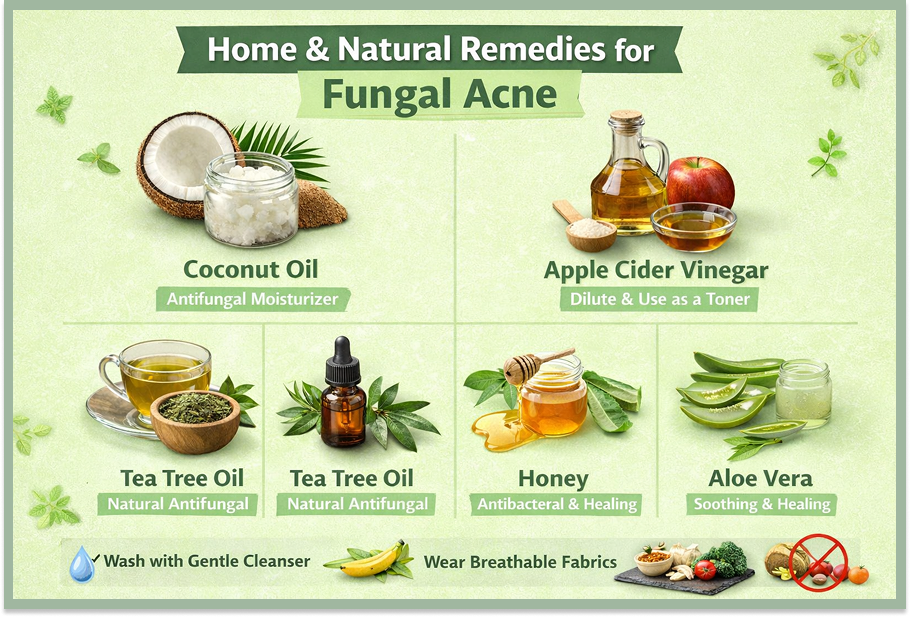
- Sulphur: Use sulphur-based soaps. They are great to work for acne and especially for stopping yeast growth. They can clean your unclogged pores and therefore enable skin care from the yeast.
- Tea Oil: Oil extracted from the tree of tea is great for diluting the yeast in the affected area. Take a TSP and apply the solution 2-3 times on the spot.
- Honey: Honey is perfect for stopping Fungal Acne growth on your skin. It cleans the pores and won’t allow fungi to inhabit on your skin pores. Apply it, keep your skin masked for 15-20 minutes, and rinse the skin.
- Warm compression: Hot bags and heated clothes, when applied to the acne area, relieve the pain and inflammation. Ask your doctor before applying it. Sometimes, heat applications can contaminate the yeast too.
What To Avoid?
Oils and fatty acids that you use on your skin for skin care causes yeast on your skin at times. Hence, when you develop such infections, you need to change your skin care routine for sure. Here are the things you must avoid during and after the treatment:
- Acids: Never use any product that contains Stearic and Oleic acid. Lauric acid is also responsible for the growth of yeasts. So, avoid them, too.
- Fermented skin care items: Fermented skin care items, like lactobacillus feeds yeast to grow them. Hence, avoid them.
- Shea Butter: Shea Butter is available in many of the moisturizers to keep your facial skin glowing. However, they capture heat and can cause the growth of yeast.
FAQs
Q. Is There Any Safe Oil That I Can Apply To The Acne?
Generally, mineral oils are considered safe for use. You can also apply some MCT oils, like caprylic or Squalane on the acne spot.
Q. Can I Apply Any Moisturizer To The Acne Spot?
If, at all, you need to apply any moisturizer to avoid the Vaginal dryness from the use of topical solutions, apply Niacinamide-based moisturizers only. They are gel-based and Hyaluronic acid-based components and are very effective for acne.
Q. Which Moisturizer To Avoid During Treatment?
Moisturizers that contain Shea Butter must be avoided. They trap the heat on the spot and can be a fermentation spot for the yeasts.
Q. Can I Apply Cotton To The Acne Spot?
If it is a Fungal Acne-infected, ever use cotton pads on the spot. They will react with the fungi and cause contamination to the areas that comes in touch to the cotton.